Biochar – Building Resilient Soils for Long‑Lasting Green Spaces
Biochar in Landscaping – Building Resilient Soils for Long‑Lasting Green Spaces
Successful landscaping is built from the ground up. Whether the goal is long‑lived urban trees, robust planting beds or low‑maintenance green areas, soil quality is a decisive factor. One material that has gained increasing attention in professional landscaping is biochar – a stable, carbon‑rich soil amendment that can improve soil function and support long‑term soil resilience when used appropriately.
In demanding urban environments, well‑designed growing media are essential. Biochar can be part of a solution that helps soils perform more consistently over time.
What is biochar?
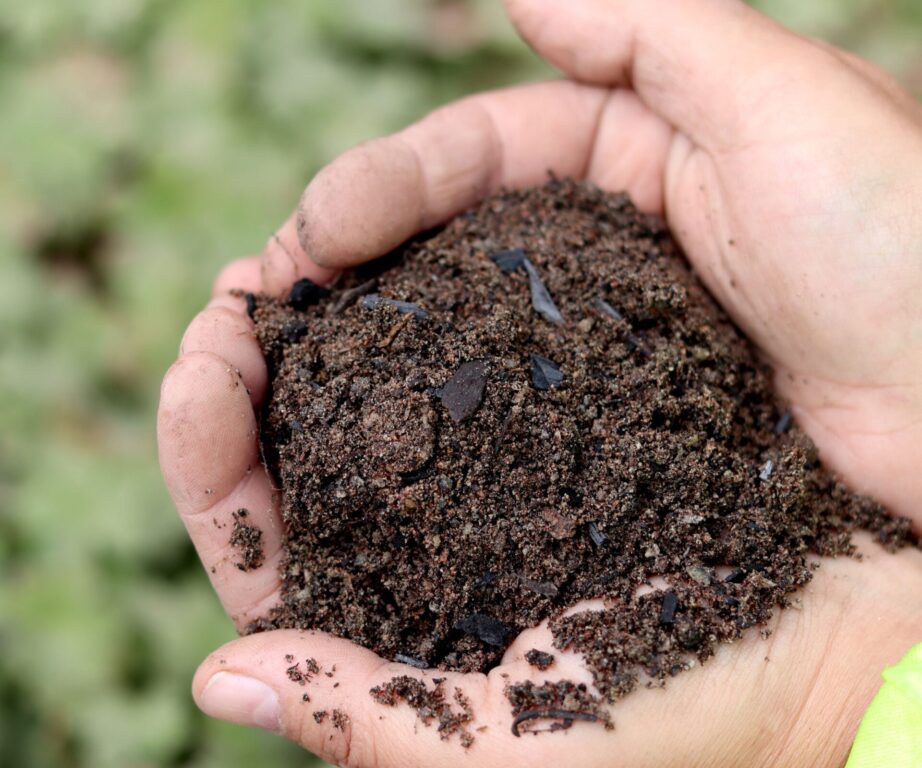
Biochar is produced by heating biomass such as wood or plant residues in a low‑oxygen process known as pyrolysis. This process converts organic carbon into a more stable form that decomposes very slowly in soil and can remain there for long periods.
In landscaping, biochar is valued not only for its carbon content, but for its highly porous structure, which can enhance the physical, chemical and biological properties of growing media.
Why biochar works well in landscaping soils
Landscaping soils are often exposed to compaction, limited rooting space, irregular watering and nutrient losses. Under these conditions, biochar can contribute to improved soil performance in several ways:
- Structural stability and aeration
Biochar helps create a more porous soil structure, improving air exchange and supporting root development. This is particularly important in planting beds and structural soils where roots need access to oxygen over many years. - Balanced water management
Biochar can improve the soil’s ability to retain moisture while still allowing excess water to drain. In urban landscapes, this supports plant resilience during dry periods and helps manage heavy rainfall. - Nutrient retention and efficiency
When properly charged, biochar can bind nutrients and reduce leaching. This allows nutrients to remain available in the root zone for longer, rather than being washed out of the soil. - Support for soil biology
The pore structure of biochar provides habitats for microorganisms and supports beneficial soil life, including mycorrhizal fungi. This biological activity is essential for healthy, long‑lived perennial plantings.
Biochar in urban trees and planting beds
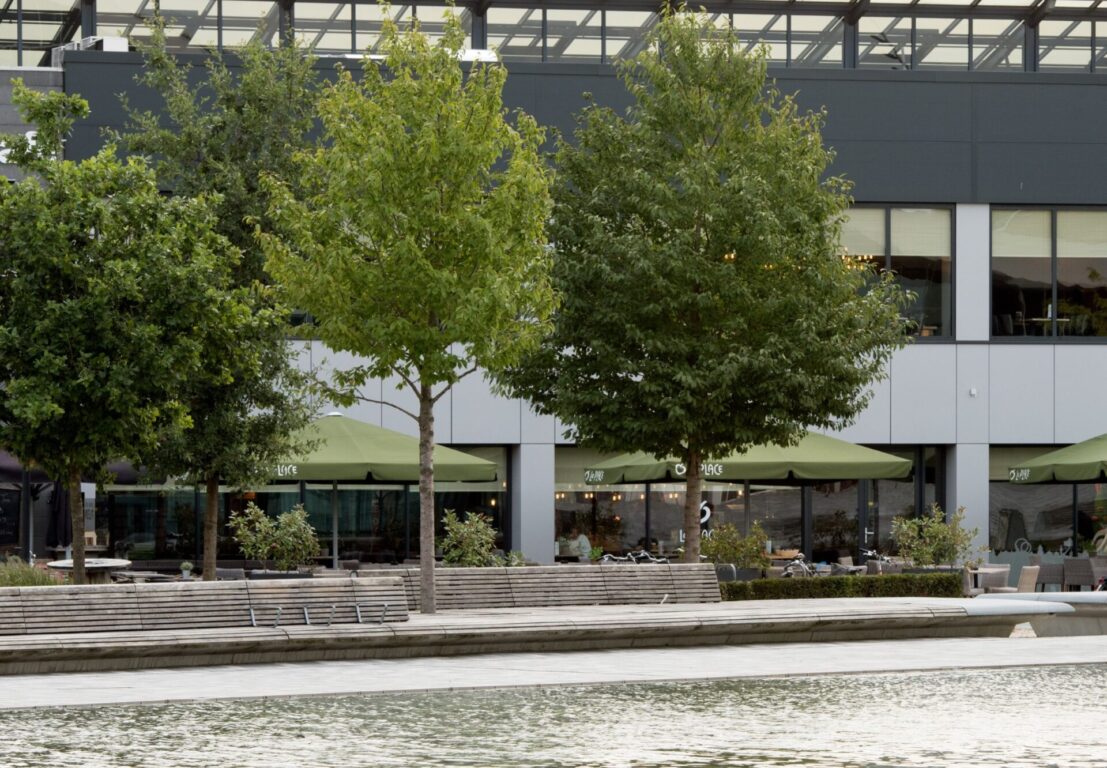
In urban tree planting and large‑scale landscaping projects, biochar may be incorporated into growing media together with structural aggregates such as crushed stone. This combination helps manage soil compaction while supporting root growth in confined soil volumes.
In parks, streetscapes and public spaces, biochar‑enhanced growing media can contribute to:
- Improved oxygen availability for roots
- Better water and nutrient retention in limited soil volumes
- Reduced mobility of certain pollutants in urban soils
These characteristics make biochar a useful component in planting beds designed for long service lives and reduced maintenance needs.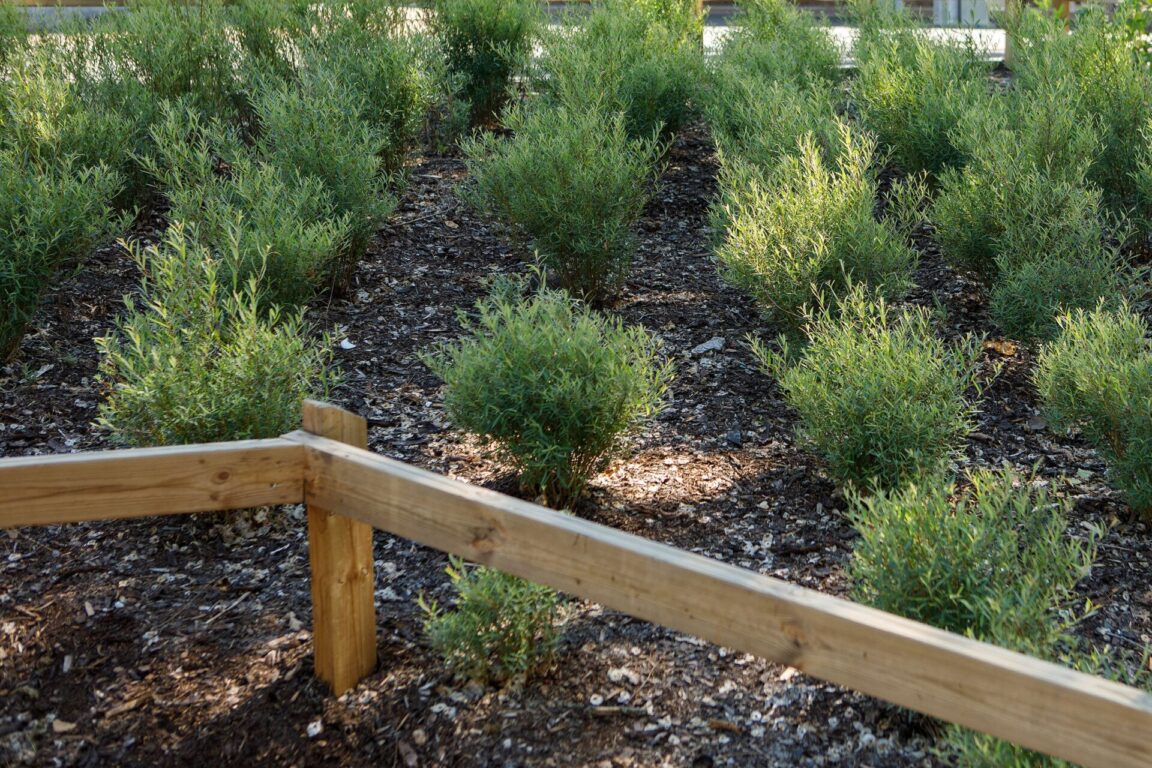
Biochar as a carbon sink
Biochar also plays a role in carbon sequestration. The carbon contained in biochar originates from atmospheric carbon dioxide captured by plants during their growth. Through pyrolysis, this carbon is transformed into a more stable form.
When biochar is incorporated into soil, part of this carbon can be stored for long periods instead of returning quickly to the atmosphere. For this reason, biochar is considered a potential carbon sink when it is produced and used responsibly.
The carbon sequestration capacity of plant-based biochars has already been harnessed for emissions compensation. For example, biochar producers certified on the Puro.Earth carbon marketplace sell carbon removal certificates linked to their biochar production. These same CORCs are registered by Kekkilä and Hasselfors for customers’ landscaping projects when biochar-growing media are purchased together with the associated biochar carbon credits.
It is important to note that climate benefits depend on several factors, including feedstock origin, production process, transport, application method, and verification. In professional landscaping projects, carbon sequestration can be documented and accounted for when certified biochar and verified calculation methods are used.
Charging biochar – essential for effective use
Before being mixed into growing media, biochar should be charged with nutrients and microbial life. Due to its adsorption capacity, untreated biochar may initially bind nutrients already present in the soil.
Common charging methods include:
- Mixing biochar with compost, organic fertilisers or manure
- Soaking it in nutrient‑rich liquids such as compost leachate or diluted organic fertiliser
- Using biochar in composting systems, where it gradually absorbs nutrients over time
Once charged, biochar becomes an active component of the soil system.
Application rates and long‑term benefits
In landscaping applications, biochar is typically mixed into the soil profile rather than applied on the surface. Depending on soil type and use, growing media may contain approximately 10–20% biochar‑containing material by volume.
Because biochar is highly stable, its effects accumulate over time. Unlike organic matter that decomposes, biochar continues to support soil structure, nutrient dynamics and biological activity throughout the lifespan of the planting.
Learning from history – applying it to modern landscapes
The long‑term effects of stable carbon in soils are illustrated by Terra Preta soils in the Amazon basin, created centuries ago through the addition of charcoal and organic matter. These soils remain fertile today and demonstrate how carbon‑rich amendments can influence soil quality over generations.
Modern landscaping applies similar principles, adapted to today’s requirements for durability, functionality and environmental responsibility.
A strategic material for future landscapes
For landscape designers, contractors and municipalities – and for everyone who lives and moves through urban environments – biochar is more than a soil improver. It is a strategic material that can support resilient plantings, long‑term soil performance and responsible approaches to climate and resource management.
By combining soil improvement with long‑term carbon storage potential, biochar helps lay the foundation for greener, healthier and more durable urban landscapes.
Read more:
Så beräknas kolkrediter – Hasselforsgarden.se
Q&A: biohiili ja hiilinielut viherrakentamisessa – Kekkilä.fi