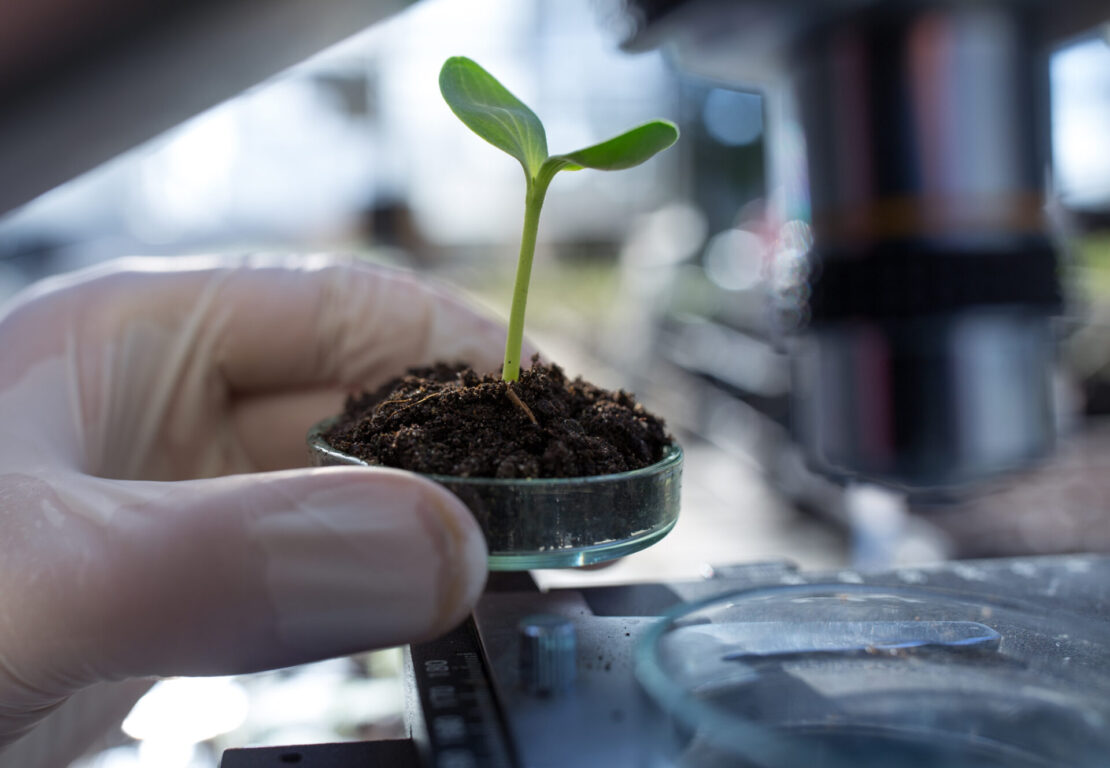
How do we assess the environmental impacts of growing media?
The environmental impacts of growing media can only be accurately assessed by considering its full lifecycle, from the sourcing of raw materials through transport and use to end-of-life management.
We have the knowledge and expertise to support growers in improving resource efficiency, crop performance and substrate selection based on their growing conditions
There is an increasing demand for solutions with lower environmental impacts. In countries like Germany, the Netherlands and the United Kingdom this is clearly visible in customer requests. Our product development and innovation teams are creating recipes with an increased share of raw materials with a lower environmental footprint to fulfill those market demands. By collaborating on the following steps, we believe we can provide growing media that are fit for purpose, aligned with market needs and developed using generally approved environmental criteria.
We develop growing media based on growing performance, environmental impacts and raw material availability
Many aspects are considered when selecting raw materials for our growing media recipes. We first look at the physical, chemical and biological performance of raw materials or a mix. It is important that the growing media solution has consistent performance and is safe to use, with low risks of impurities and diseases. For some raw materials processing steps are needed, while others are relatively safe to begin with. Especially circular raw materials and composts have a higher chance of contamination, which has to be dealt with before shipping to the grower.
Once we are aware of the performance needs of the grower we will start to optimise the environmental impacts of our growing media solutions. This can mean similar performance of the growing media with different raw materials (e.g. there are many recipes for universal potting soil) and sometimes it means the choice of raw materials with lower assessed environmental impacts for the relevant application results in a change of the processes at the grower (e.g. in irrigation or fertilization). As long as there is a mutual understanding of the effects of recipe changes, creating a recipe with lower environmental impacts is possible.
How do we compare the environmental impacts, availability and growing performance of different raw materials?
In principle we are using different tools to evaluate our products and raw materials; e.g. lifecycle assessments (‘LCAs’). When altering the composition of a growing media, it is important to consider how the changes affect its use in cultivation. Different materials can influence the demand for water, fertilisers, and other inputs, so a comprehensive assessment is needed to ensure overall environmental performance is improved.
And finally, availability of raw materials also plays an important role. Some raw materials are abundantly available, while others are only available in limited quantities. Especially now that many industries are looking for biobased raw materials (e.g. chemical-, construction- and energy industry) we are aware that competition for our raw materials will increase.
The most suitable growing media are fit for purpose
For growing media to support efficient resource use, it must match the specific crop’s needs and growing conditions. We call this “fit for purpose”. Optimizing the growing process and substrate can be time consuming. But using a growing media in which a plant grows poorly is a waste of resources, energy, and labour.